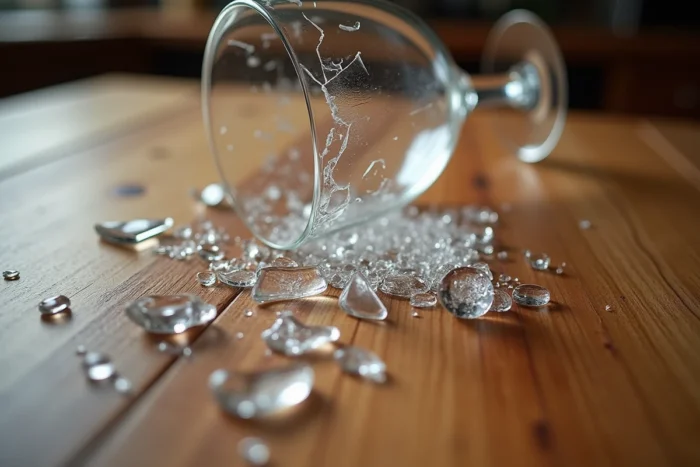
The omen associated with breaking white glass relies on a distinction that most mainstream articles overlook: the nature of the broken material radically alters the interpretation. Glass, mirror, crystal, and earthenware belong to separate symbolic registers in European folk traditions. Understanding this framework allows us to place the omen of white glass back in its original context, far from catch-all compilations that conflate all fragile objects.
White glass versus broken mirror: two distinct symbolic registers
The most structured superstition concerns the mirror, not glass. The “seven years of bad luck” comes from the ancient conception of the mirror as a reflection of the soul and the seven-year cycles of renewal. White glass, on the other hand, belongs to a more diffuse register, without a codified time cycle.
This confusion is constant in online content. Tableware, drinking glasses, windows, and mirrors are amalgamated under the label “broken objects bring bad luck.” However, European folk tradition clearly separates them.
Breaking white glass is traditionally considered a good omen, provided the breakage is accidental. A deliberate act nullifies the omen, or even reverses it. The number of shards also mattered: the more pieces there were, the more years of happiness were promised. This naive arithmetic signals an omen of domestic origin, rooted in the everyday life of kitchens and celebrations, unrelated to the metaphysical dimension of the mirror.
We observe that this boundary between glass and mirror has blurred over the centuries because both materials share a physical property, transparency, and a common fragility. To delve deeper into the meaning of breaking white glass, one must return to this material distinction before any symbolic reading.
Color of glass and interpretation of the omen: the role of material
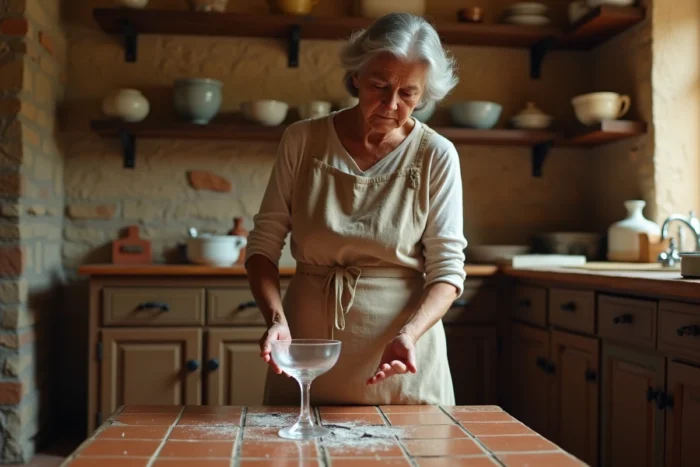
The mention of “white” is not trivial. In the vocabulary of glassmakers and folk traditions, white glass refers to colorless glass, without the addition of metallic oxides. This material purity gives it a symbolic value of clarity and renewal that tinted glass does not possess.
A broken green or amber glass has never carried the same weight in French domestic beliefs. White glass, due to its total transparency, referred to the idea of unaltered light. Breaking this transparency symbolically released this light, hence the positive interpretation of accidental breakage.
Crystal, blown glass, industrial glass
The very nature of the broken object refines the traditional interpretation:
- Lead crystal, more resonant and expensive, signaled an upcoming significant event, not necessarily happy, but noteworthy.
- Hand-blown glass, imbued with the breath of the glassmaker, conveyed a more personal omen, often linked to a change in the intimate sphere.
- Common industrial glass, produced en masse, carried a weak or neutral omen, the symbolic weight being proportional to the perceived value of the object.
This hierarchy shows that superstition functioned as a system of material reading, where the type of glass, its color, and its manufacturing origin guided the meaning.
Social media and contemporary inversion of the omen
Interpretations today circulate on video platforms where creators of esoteric content (often labeled “spiritual coaches”) recode glass breakage as an exclusively positive sign. This systematically optimistic reinterpretation constitutes a recent trend that strays from folk tradition, which admitted neutral or negative cases depending on the context of the breakage.
The reversal is significant. The tradition distinguished between accidental breakage and deliberate breakage, the time of day, and the presence or absence of witnesses. Viral versions on social media eliminate these nuances to retain only a single message: breaking glass always signifies a release or renewal.
We observe that this smoothing of the omen responds to a logic of shareable content. An ambiguous or conditional message generates less engagement than a reassuring statement. Superstition then becomes a medium for emotional communication, detached from its original function.

Conditions of breakage and traditional reading framework
European folk traditions applied several criteria to interpret a broken white glass. These criteria did not form a unique codified system but are found in collections of French rural beliefs.
- The accidental nature of the breakage was the primary condition for a positive omen. A deliberately broken glass, even if white, lost all auspicious value.
- The festive context reinforced the favorable interpretation. A glass broken during a wedding or baptism meal amplified the promise of happiness.
- The number of pieces served as a symbolic counter: each shard corresponded to a year of luck, according to the most widespread version.
- The time of breakage could also play a role: a glass broken in the morning signaled a day under good auspices, while a nighttime breakage remained more ambiguous.
The omen existed only within a set of conditions, never in the mere act of breaking an object. This contextual complexity has been largely erased by the simplified versions circulating online.
The particular case of gifted glass
A glass received as a gift and accidentally broken carried a heavier interpretative load. The relationship with the giver came into play: the breakage could signal a transformation in the bond between the two people. This relational reading of the omen has almost disappeared from contemporary sources, where glass is treated as a generic object without history.
The symbolism of white glass depends as much on its material as on its context of breakage. Reducing this omen to a simple “good luck or bad luck” amounts to amputating a tradition that functioned on multiple simultaneous levels of interpretation. The material, color, intention, moment, and social context formed a coherent system of interpretation of which current digital versions retain only a fragment.