We open a pack of pods, use three, and the rest sits in a drawer for weeks. The coffee inside doesn’t become dangerous, but it loses what makes it interesting: the aromas, the roundness in the cup, the freshness at extraction. The preservation of coffee pods relies on a few simple actions that significantly change the result in the cup.
Condensation and kitchen micro-climate: the trap that pods suffer from first
Most advice on coffee preservation boils down to “avoid moisture.” In practice, the problem is more specific. What degrades a pod stored in the kitchen is the repeated cycle of temperature variations combined with ambient steam.
When we boil water, use an oven, or run a dishwasher, the temperature of the countertop and nearby cabinets rises significantly. Once the appliance is turned off, it drops again. This back-and-forth causes condensation on the packaging, sometimes even inside if the material is weakened.
The concrete result: the coffee clumps (caking phenomenon), extraction becomes uneven, and the aromas deteriorate well before the date indicated on the package. A cabinet located just above the cooktop or next to the oven is the worst possible location, even if it seems convenient.
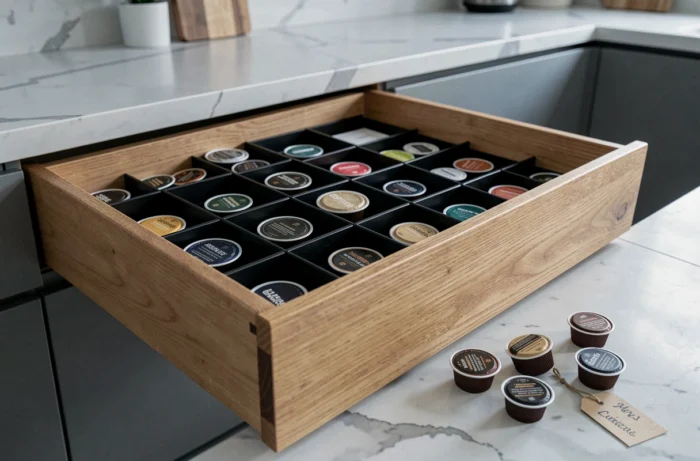
We tend to store the pods where we prepare the coffee, out of habit. To better preserve their freshness, the preservation of coffee pods involves choosing a cabinet away from heat sources, ideally in a room where the temperature remains stable. A pantry, a utility room, or simply a piece of furniture in the hallway works better than a drawer under the espresso machine.
Storing coffee pods in the refrigerator: why it makes things worse
The idea seems logical: cold slows down degradation, so the fridge should prolong freshness. In reality, the refrigerator is counterproductive for pods.
The problem doesn’t come from the cold itself, but from what happens when we take the pods out to use one or two. The transition from cold to room temperature immediately generates condensation on and inside the packaging. If we put the pack back in the fridge afterwards, the cycle starts again.
Additionally, there’s a factor often underestimated: coffee absorbs odors from its environment. A refrigerator contains cheeses, leftovers, vegetables. Even through a partially opened package, these odors migrate to the ground coffee contained in the pod.
- Every time the fridge is opened, the pods are exposed to a thermal shock that promotes condensation and caking of the coffee
- The aromas of coffee are volatile compounds that degrade faster with cold humidity than at stable room temperature
- Food odors from the refrigerator contaminate the coffee, even through a sealed bag
If we really want to use cold for a large stock, the freezer works better than the refrigerator, provided that we never refreeze pods that have already been thawed. We separate the stock into small portions, each in a sealed bag, and only take out what we will consume in the following days.
Light and original packaging: what to keep and what to change
Light, including artificial light, accelerates the oxidation of the aromatic compounds in coffee. Pods sold in opaque individual packaging (aluminum, metallized film) are well protected as long as they remain sealed. The problem begins when we open the outer bag that contains several pods.
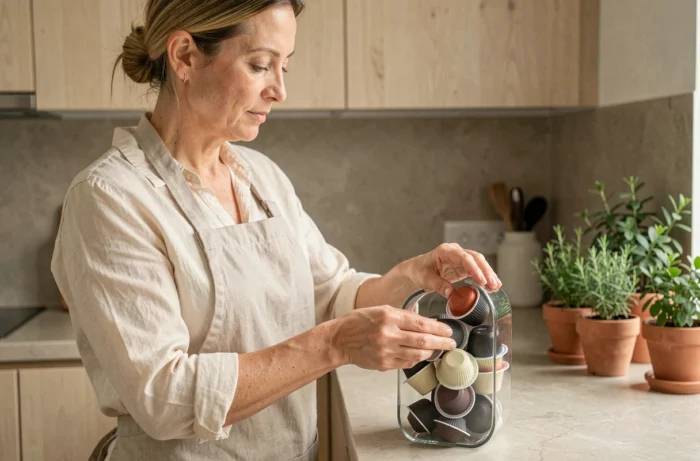
Once this bag is opened, the remaining pods are exposed to air and light from the cabinet. Transferring the pods to an opaque airtight container after opening the lot is the action that has the most impact on their aromatic lifespan.
Opinions vary on this point, but metal boxes with silicone seals seem to yield better results than transparent plastic boxes. Plastic allows light to pass through, and some models are not perfectly airtight. A ceramic box with a lid seal also works well.
However, there’s no need to remove the pods from their individual packaging to put them loose in the box. Each sealed pod maintains its own protective micro-environment. We store the sealed pods in the box, and we only open them at the time of use.
Purchase quantity and stock rotation: the most underestimated lever
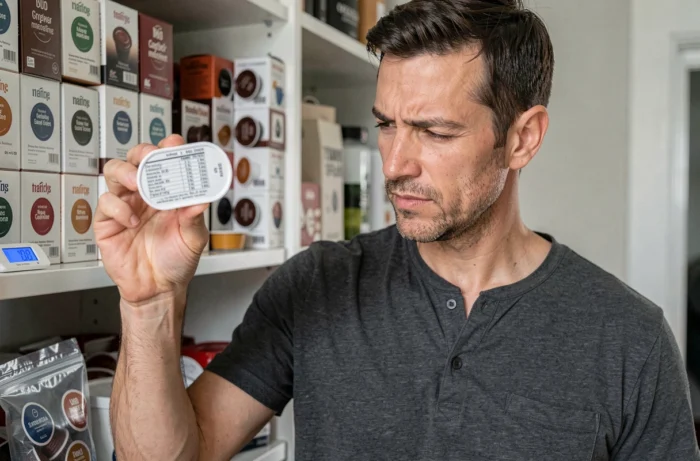
No container or storage technique can compensate for an overly old stock. The ground coffee contained in a pod begins to lose its aromas from the moment of production, even under protective atmosphere. The minimum durability date (MDD) printed on the package indicates the limit of suitable quality, not a health expiration date.
In practice, buying in small quantities remains the most effective method for drinking flavorful coffee. We adjust purchases to our actual consumption over two to three weeks rather than storing several months’ worth of pods in advance.
- Noting the opening date of the bag on the storage box allows tracking the actual freshness of the batch
- Using the oldest pods first (first in, first out) prevents finding forgotten pods at the back of the cabinet
- Prefer packaging formats suited to your consumption rather than large promotional lots, unless you freeze the surplus immediately
The quality in the cup depends as much on storage as on grind and machine. A well-preserved pod in a cool, dry, dark cabinet, used within a reasonable time after purchase, yields a significantly more aromatic espresso than a pod that has sat for months in a kitchen drawer exposed to heat. The best investment is not a sophisticated storage accessory, but a purchasing habit adjusted to what we actually consume.