The choice of a men’s guinguette pants relies on details of cut and material that most guides overlook. We will detail the technical points that make the difference between a credible retro suit and an approximate costume, from the fall of the pants to the finishing touches of accessories.
Men’s guinguette pants: high waist cut and shortened length
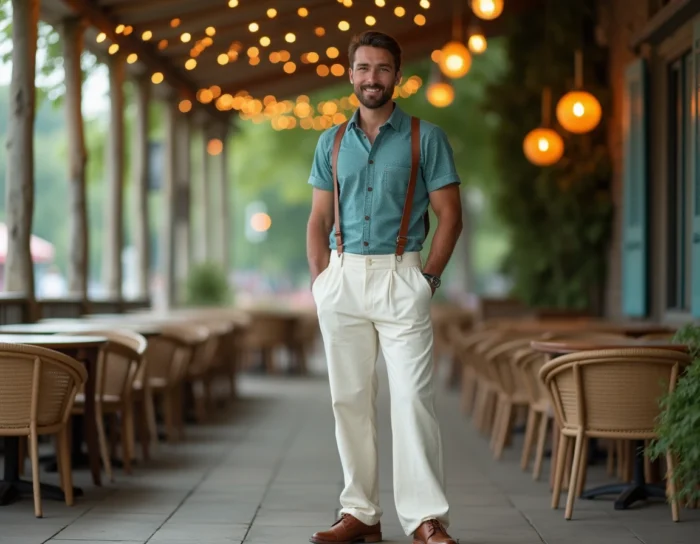
A credible guinguette pant is worn high-waisted, with the waistband at the level of the navel. This height, inherited from cuts from the 1930s to 1950s, radically alters the silhouette: it elongates the leg, defines the waist, and allows suspenders to function properly without slipping.
The trend observed at retro-bohemian events since 2024 confirms a rise in slightly shortened pants. We recommend a hem that stops just above the ankle, without a break (without fabric folding over the shoe). This subtle shortening reveals the sock or ankle, which lightens the silhouette outdoors and avoids the “too long pants” effect common in poorly fitted vintage outfits.
In terms of material, linen and lightweight cotton dominate for summer evenings. Cotton twill chinos remain a versatile choice, but a pleated linen pant enhances retro authenticity. The pleats at the front are not a cosmetic detail: they create volume at the hips and contribute to the ample silhouette at the top, tapered at the bottom, typical of the guinguette era.
The choice of a guinguette pant and accessories for men suitable for the body type is as important as the style itself. A pant that is too slim immediately betrays a contemporary reading of the look, whereas a straight or slightly flared cut respects the proportions of the time.
Suspenders or belt: a technical arbitration for the retro silhouette
Suspenders are a better choice than a belt for high-waisted pants. It’s not just an aesthetic question. On high-waisted pleated pants, a belt crushes the pleats and breaks the waistline. Suspenders hold the pants up without compressing the fabric, preserving the natural fall.
The guides for bohemian and country wedding attire 2024-2026 document a clear trend: camel or brown suspenders are taking over from the classic belt for outdoor vintage-inspired events. This choice of warm tones works particularly well with the ecru, beige, and navy blue tones that dominate the guinguette palette.
- Clip-on suspenders: easier to attach to any pant, but the clips can mark fine fabric (especially linen). Best reserved for thick cottons or chinos.
- Button suspenders: require buttons sewn inside the waistband of the pants. They offer superior support and a more authentic look, consistent with period cuts.
- Width of suspenders: we recommend a width of 3 to 3.5 cm for an adult man. Thin suspenders (2 cm) look too formal, while very wide ones (4 cm and more) lean towards stage costumes.
A detail often overlooked: the color of the suspenders should coordinate with the shoes, not with the shirt. Camel suspenders with cognac derbies, navy suspenders with dark shoes. This principle of harmony from the bottom anchors the outfit in a retro visual coherence.
Guinguette accessories for men: the hat and important details
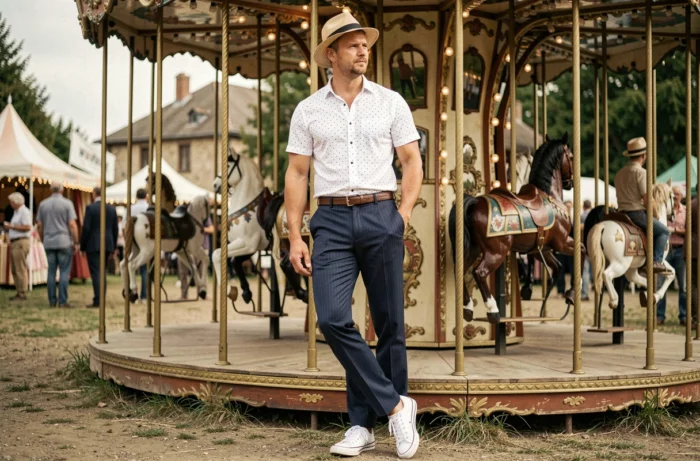
The straw boater remains the reference headwear for a guinguette evening. Its flat shape and black grosgrain ribbon directly evoke the banks of the Marne on pre-war Sundays. A boater is worn straight on the head, slightly tilted back, never pushed down like a rain hat.
The quality of the straw makes all the difference. A tightly woven straw, rigid to the touch, holds its shape all evening. Low-end models made of soft straw sag after an hour and lose their characteristic line. The ribbon should be sewn, not glued.
Bow tie or slim tie
The self-tie bow tie (not the pre-tied clip-on model) adds a touch of relaxed elegance. Polka dot or gingham patterns work better than solids for a guinguette evening: they recall the prints of tablecloths and period dresses, creating a visual unity with the festive atmosphere.
The slim tie (5 to 6 cm wide) is an alternative for those who find the bow tie too pronounced. In this case, the knot should remain small and tight, worn with the shirt collar open on the first button. This mix of formal and relaxed corresponds precisely to the spirit of the bal musette.
Visible socks and low shoes
With shortened pants, the sock becomes a full-fledged accessory. Thin striped socks, diamond-patterned socks, or in contrasting colors (burgundy, mustard, pine green) add a touch of personality without overpowering the outfit.
Low shoes are preferable to boots for outdoor evenings. Derbies, loafers, or even canvas shoes like espadrilles mounted on leather soles naturally fit into the look. The goal remains mobility: a guinguette is a place to dance.
Color palette and patterns for a coherent guinguette outfit
The guinguette palette is based on three families of tones: warm neutrals (ecru, beige, cream), blues (navy, sky, lavender), and bright accents in small touches (red, mustard, green).
- Gingham check shirt: the most identifiable pattern of the guinguette style. Prefer small to medium checks in blue, red, or green on a white background.
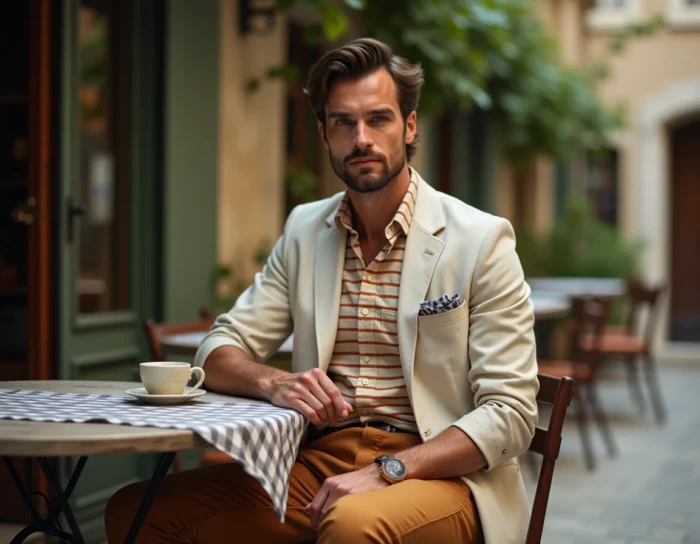
- Thin striped shirt: a less obvious but equally coherent alternative, as long as the stripes are spaced vertical.
- Solid white or ecru linen shirt: the most sober choice, allowing the accessories (suspenders, bow tie, hat) to carry the retro identity of the outfit.
We advise against tropical prints, overly large floral patterns, or fluorescent colors. These elements immediately break the historical reference and pull the outfit towards costume rather than style.
The last point to check before heading out: overall coherence. No more than three main colors in the outfit, accessories included. Beige pants, a sky blue gingham shirt, camel suspenders, and a boater form a readable ensemble. Adding a red polka dot bow tie and mustard socks to the same ensemble creates visual noise. Well-measured sobriety distinguishes the guinguette style from themed costume.