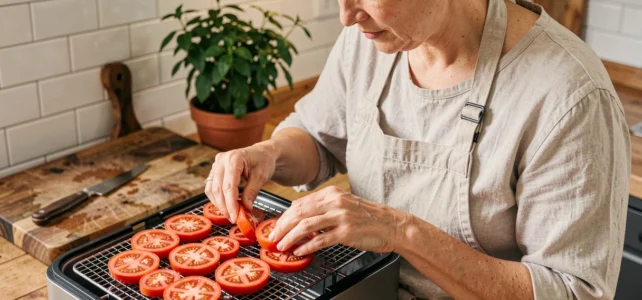
The tomato is made up of more than nine-tenths water. To achieve a concentrated result in flavor and texture, it is necessary to eliminate almost all of this water, which explains why the final yield is low: a few handfuls of dried tomatoes for a whole tray of fresh fruit. The food dehydrator remains the most consistent tool for this job, as it maintains a low and constant temperature for long hours without constant supervision.
Temperature and drying time in the dehydrator: what really changes the result
Most guides recommend a temperature range between 50 and 60 °C. What is less often specified is the concrete impact of a few degrees difference on the final texture.
At 50 °C, drying is slower but preserves more of the flesh’s flexibility. The tomatoes retain a slightly translucent appearance and a pleasant chew, ideal for preservation in oil.
At 60 °C, the process shortens by several hours, but the edges of the slices become brittle more quickly. If the goal is to reduce the tomatoes to powder for seasoning, this temperature is more suitable. On the other hand, for soft dried tomatoes intended for salads or pasta, it is better to stay at the lower end of the range.
The total duration varies according to the thickness of the slices, the ambient humidity, and the model of dehydrator. Counting between eight and fourteen hours is not unusual. To know if the drying in the dehydrator is advanced enough, simply prepare dried tomatoes in the dehydrator while monitoring their texture: a properly dehydrated tomato no longer sticks to the fingers and releases no moisture when bent.
Choosing tomatoes and cutting: two underestimated variables
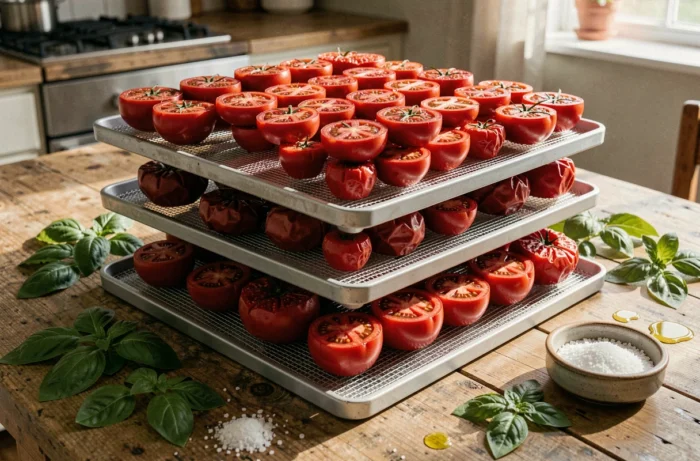
Meaty and low-seed varieties yield the best results. Roma, San Marzano, and elongated olive-type tomatoes concentrate more dry matter than round varieties filled with juice. Cherry tomatoes also work, cut in half, but their small size lengthens the preparation time.
Removing seeds and juice significantly reduces drying time. Using a small spoon or thumb to hollow out the center of each half speeds up evaporation and achieves a more uniform texture on the trays.
The thickness of the cut is as important as the variety. Slices that are too thin (less than half a centimeter) risk becoming brittle and crumbly. Halves that are too thick will retain a moist center while the edges are already dry. Aiming for a consistent thickness of about one centimeter for halves remains the most reliable compromise.
Seasoning before drying
A light salting before placing the tomatoes on the dehydrator trays helps extract residual moisture. The salt acts by osmosis and speeds up the initial hours of drying.
Herbs (thyme, oregano, rosemary) can be added before or after dehydration. Adding them beforehand allows the flavors to set into the flesh during drying. Adding them afterward, at the time of bottling, preserves their freshness. Both approaches yield different results, neither better nor worse.
Tray materials: the issue of plastic at low prolonged temperatures
A dehydrator operates for long hours at moderate temperatures. This duration-temperature combination is precisely what the European Regulation (EU) No. 10/2011 on plastic materials in contact with food identifies as a determining factor for the migration of compounds into food.
In practice, this means that food-grade plastic trays compliant with this regulation remain usable. Field reports vary on this point: some regular users prefer stainless steel trays to avoid any issues, while others have used their plastic trays for years without noticing a problem.
If this topic concerns you, several manufacturers now offer dehydrators with stainless steel or glass trays. The additional cost is real, but the investment is justified for frequent use, especially with acidic foods like tomatoes.
Storing homemade dried tomatoes: the trap of olive oil
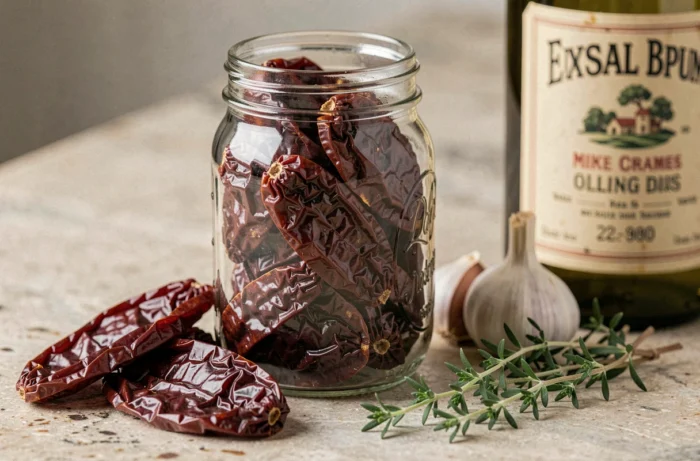
Placing dried tomatoes in a jar of olive oil with garlic and herbs is a classic. It is also the point where health risks increase if the method is not rigorous.
The oil creates an anaerobic environment conducive to the growth of Clostridium botulinum. This bacterium thrives in the absence of oxygen, and an insufficiently dried tomato retains enough moisture to allow its growth. Recommendations have tightened in recent years on this subject.
The precautions to take for oil preservation:
- The tomatoes must be perfectly dry, with no soft spots or residual moisture to the touch.
- The jars must be systematically stored in the refrigerator, even if older recipes suggest room temperature storage.
- The shelf life in the refrigerator should not exceed a few weeks for non-sterilized preparations.
The safest alternative remains dry storage. Well-dehydrated tomatoes, stored in an airtight bag or a glass jar away from light, can last for several months without risk. A stint in the freezer further extends this duration.
Drying test before bottling
Before packaging the tomatoes, fold a slice in half. If juice beads or if the flesh seems sticky, return to the dehydrator for a few hours. Insufficient drying is the primary cause of mold in homemade jars.
Dried tomatoes in the dehydrator require time, not technicality. Choosing meaty varieties, maintaining a stable temperature around 55 °C, checking the texture before storing: these three points are enough to achieve consistent results, jar after jar.