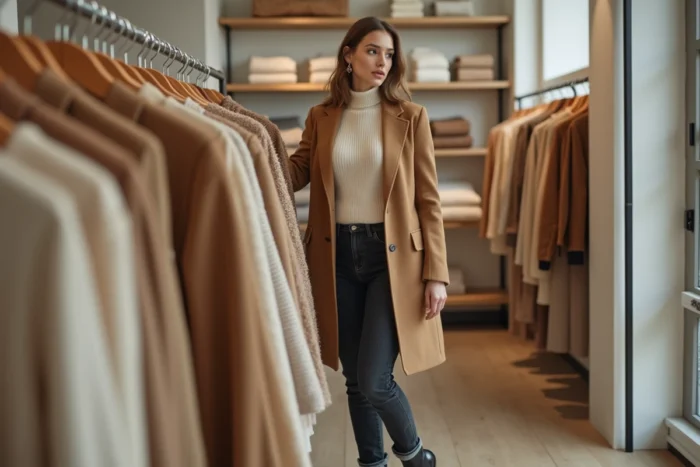
You open your wardrobe one July morning, and nothing works. The pants bought last year seem out of place, the colors no longer match. This seasonal mismatch is felt by everyone, and it says something specific about how fashion trends are shifting right now.
Fabrics and textures that change the silhouette this summer
Before discussing colors or cuts, this season is all about touch. Structured linen is making a comeback, not the wrinkled linen of previous summers, but stiffer, almost architectural versions. The result on a straight jacket or high-waisted pants is a sharp silhouette even in intense heat.
Mercerized cotton is also gaining ground in current collections. This finish gives the fabric a slight sheen without veering into satin. On a basic tee-shirt, the difference is immediate: the garment withstands washes better and retains its shape.
We also note the return of crochet, not as a beach accessory like in past seasons, but integrated into everyday pieces. Structured tops, mid-length skirts. Dense and tight crochet replaces the openwork version, making it wearable in the city. To keep up with these textile evolutions over the weeks, regular selections can be found on the fashion page on HyperScoop, which compiles the standout pieces of the season.
Seasonal colors: beyond beige and white
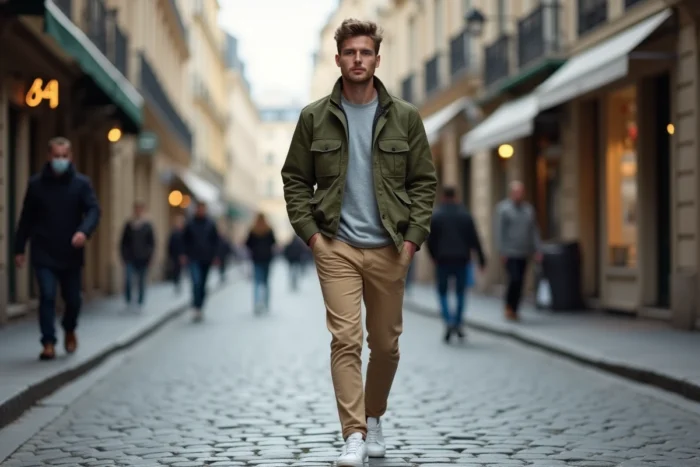
Beige and white remain safe bets, but what distinguishes a personal style this season is the targeted use of a strong color on a single piece. We’re not talking about a total colorful look, but rather an element that stands out.
Deep burgundy surprisingly works well in summer when worn on a lightweight fabric. A burgundy poplin shirt with cream pants creates a contrast that classic navy no longer offers. Dark olive green, often reserved for autumn, is also asserting itself in summer pieces like shorts or shirt dresses.
Color combinations that work concretely
- Burgundy and cream: burgundy adds depth without weighing down, especially on fine fabrics like poplin or cotton voile
- Olive green and off-white: a combination that avoids a military vibe as long as fluid cuts are chosen instead of cargo cuts
- Butter yellow and lavender blue: two soft shades that enhance each other without creating an aggressive contrast, suitable for daytime looks
- Terracotta and raw denim: dark denim anchors the terracotta and prevents the “too warm” effect that this color can give alone
Focusing on a duo of colors rather than an extensive palette allows for visual coherence without having to think about it every morning. You choose your two shades at the beginning of the season and build around them.
Cuts and volumes: what replaces oversized
Oversized is not disappearing, but it is becoming more defined. Blurry volumes give way to loose but structured cuts. The difference lies in the placement of the volume: on the shoulders or chest rather than throughout the garment.
Wide pants remain a staple. Its most current version is slightly shortened, just above the ankle, with a marked crease. This tailoring detail changes the perception of the entire outfit. You shift from a relaxed look to a constructed one.
The return of the defined waist on upper pieces
Fitted jackets are making a comeback, not in the fitted style of the 2010s, but with a waist slightly emphasized by a seam or an integrated belt. The effect works on blazers as well as on light jackets.
Shirts are worn tucked into pants, which has not been the norm in recent seasons. Tucking a linen shirt into pleated pants re-centers the silhouette effortlessly. You gain sharpness what you lose in relaxation.
Digital product passport: the regulation that will change your fashion purchases
On the ground, a European regulatory constraint will shake up habits. The ESPR regulation (eco-design of sustainable products) mandates a digital passport for textile products. The specific delegated act for the sector is expected by the end of 2027, with application starting from the spring-summer 2028 collections.
This passport must contain around forty pieces of information: exact fiber composition, durability, reparability, environmental performance. Each production batch will be documented. For us as buyers, this means direct and verifiable access to what a garment actually contains.
Brands anticipating this requirement are already beginning to integrate QR codes on their labels. When making your next purchases, checking if a brand communicates this data is a reliable indicator of its seriousness regarding composition and manufacturing.
Building a seasonal wardrobe with few pieces
Rather than multiplying purchases, five to seven well-chosen pieces cover the majority of situations in a season. This approach works if each piece is compatible with at least three others in the wardrobe.
- A pair of wide pleated pants in a neutral shade (cream, beige, or light gray) that pairs well with both a tee-shirt and a shirt
- A structured light jacket, in rigid linen or thick cotton, wearable open or closed depending on the context
- Two tops in the strong color chosen for the season, one formal and one casual, to alternate without fatigue
The idea is not to limit oneself by principle. It’s about choosing pieces whose material, cut, and color create multiple combinations. A reduced but coherent wardrobe offers more possibilities than an overloaded closet.
This season’s fashion trends reward precision over accumulation. Choosing a durable material, two colors that converse, a sharp cut: this is where a style is built that does not depend on the next fashion show.