
A sloped area overrun with brambles after a summer without maintenance, a flowerbed edge that the mower can’t reach, a bank where the grass grows knee-high in just a few weeks: it’s in these situations that you can measure the difference between a suitable brush cutter and an undersized device. Choosing the right machine depends on three concrete parameters: the type of vegetation, the terrain configuration, and the frequency of use.
Cutting system and vegetation: the criterion that is often underestimated
Before even looking at the motorization, it’s beneficial to start with what needs to be cut. A clean lawn edge does not require the same tool as clearing woody brambles. The cutting system directly determines what the machine can (and cannot) do.
A round or square nylon line is suitable for soft grass, edging finishes, and young shoots. Beyond that, as soon as the stems exceed the diameter of a pencil, the line breaks or wears out too quickly. You then switch to a three or four-tooth blade, suitable for tall grasses and semi-woody brush.
To compare cutting tools and motorizations based on your usage, a useful resource is: https://www.ma-debroussailleuse.com/, which details the different configurations available on the market.
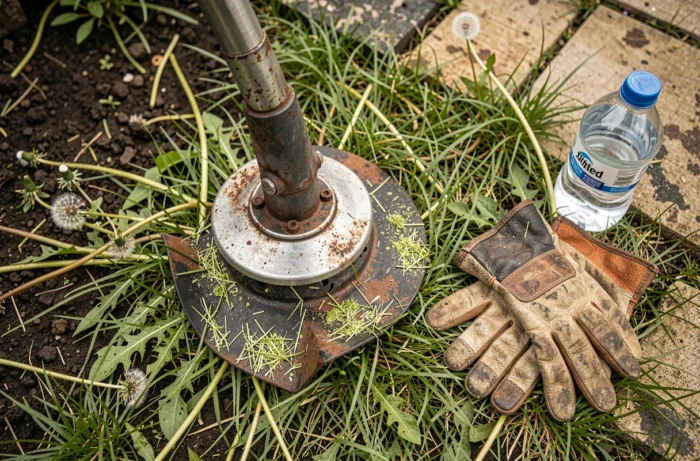
Brambles, shrub shoots, and small woody plants require a steel-toothed disc or a circular saw blade. This is not a marginal accessory: the toothed disc transforms a brush cutter into a clearing tool. Checking the compatibility of the angle drive with this type of blade is part of the checks to be made before purchase.
- Nylon line (round, square, or serrated): edges, soft grass, finishes around flowerbeds and trees.
- Three-tooth blade or mulching knife: tall grasses, nettles, dense but non-woody vegetation.
- Steel disc with spikes or circular saw: thick brambles, shrub shoots, small forest clearing.

Battery or gas brush cutter: choosing based on the terrain
Catalogs offer three families of motorization: gas, battery, and corded. The corded (electric with cable) is limited to very small gardens near a power outlet. It is ruled out for any rough or large terrain.
The gas engine remains the reference for large areas and tough vegetation. The power available continuously does not depend on a charge state, and you can work for several hours without interruption. In return, the weight is higher, mechanical maintenance (spark plug, air filter, oil-gas mixture) is part of the daily routine, and the noise level requires wearing hearing protection.
The rapid advancement of battery technology
The European market for cordless gardening tools is undergoing a structural shift. Battery platforms are expected to represent the majority of unit sales by 2026, compared to about half a decade ago. This progress is explained by improvements in battery life, reduced charging times, and increasing compatibility of batteries across different tools from the same manufacturer.
For a medium-sized garden with moderate vegetation, a battery brush cutter meets most needs. Feedback varies on this point as soon as you tackle dense brambles over large areas: battery life can drop quickly under heavy load.
Weight, harness, and balance: what changes a workday
You can choose the best motorization and the right cutting system, but if the machine is poorly balanced or too heavy, you’ll give up after an hour. Ergonomics is not just about the weight listed on the technical sheet. The distribution of mass, the type of handle, and the harness matter just as much.
A loop handle (D-type) offers maneuverability in tight spaces: between trees, along a wall, around garden furniture. A double handlebar (bike-type) handle is better suited for large sweeps in open terrain, as it distributes the effort across both arms and limits back twisting.
The harness makes a difference during long sessions
A simple shoulder harness is sufficient for short interventions. Once you exceed half an hour of continuous work, a double-strap distributing harness with lumbar support radically changes comfort. Some professional models incorporate an offset attachment point that frees the shoulders and transfers weight to the hips.
This detail does not always appear in comparisons, but it weighs heavily in the choice of a brush cutter intended for regular maintenance rather than occasional use.
Noise and regulations: a concrete purchasing parameter
The European directive 2000/14/CE regulates the noise emissions of equipment used outdoors, including brush cutters. An additional directive from November 2025 modified this framework by removing the obligation to maintain the NOISE database, while maintaining the obligation for compliance declaration and acoustic marking on the device.
In practice, this means that the guaranteed noise level is indicated on the machine. It can be compared from one model to another before purchase. In residential areas, municipal decrees often limit the use of noisy motorized equipment to weekdays and certain time slots. A battery brush cutter, significantly quieter than a gas model, expands the usage windows without risking a fine.
Maintenance of the brush cutter: anticipating recurring costs
The purchase price reflects only part of the budget. On a gas model, the spark plug, air filter, and starter are regularly replaced. The oil-gas mixture must respect the ratio prescribed by the manufacturer to avoid clogging the engine.
On a battery machine, mechanical maintenance is reduced to cleaning the casing and replacing cutting consumables (line, blades). The main cost remains the battery itself, whose lifespan depends on the number of charge cycles and storage conditions. Keeping the battery between twenty and eighty percent charged extends its longevity.
The choice of a brush cutter depends less on the brand than on the compatibility between the cutting system, motorization, and the actual constraints of the terrain. Starting from the vegetation to be cut rather than the catalog remains the most reliable shortcut to avoid a disappointing purchase.