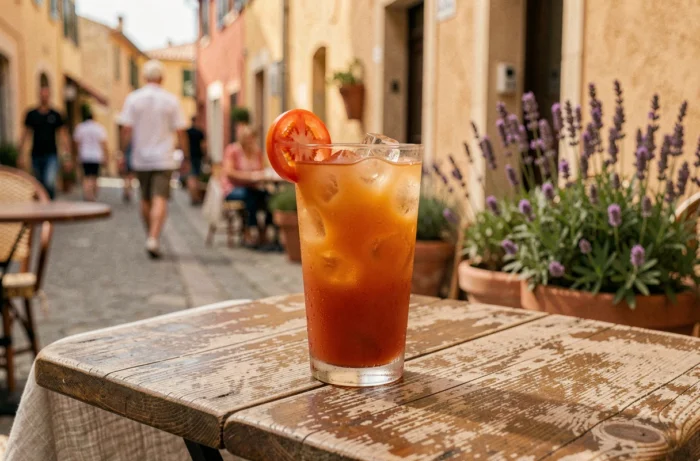
Ordering a Ricard tomato in a bar in Var or the Bouches-du-Rhône surprises no one. Elsewhere in France, the reaction ranges from curiosity to outright perplexity. This mix of pastis and tomato syrup, recognizable by its reddish-orange hue, is one of those drinks whose reputation circulates mainly by word of mouth, among regulars at the bar and vacationers converted on a Provençal terrace.
Tomato syrup in pastis: a more logical combination than it seems
Have you ever tasted a well-seasoned gazpacho with aromatic herbs? The principle of the Ricard tomato is based on a comparable sensory logic. Star anise, the central ingredient of pastis, develops powerful aromas that easily dominate a classic sweet mix. The tomato syrup brings a gentle acidity that tempers the licorice without overpowering it.
The tomato itself is far from being an insignificant fruit in Provençal cuisine. It features in most dishes from the region, from tian to ratatouille. Pairing it with an aniseed drink is almost a local reflex, an extension of the table to the aperitif glass.
To better understand the origin of the Ricard tomato, we must return to the atmosphere of Marseille bars in the 1930s, where bar owners constantly experimented with new combinations with the freshly popularized pastis.
Pastis de Marseille: a designation that frames the product
The pastis used in a Ricard tomato is not just any aniseed alcohol. The designation Pastis de Marseille requires a minimum of 45% vol., which distinguishes it from generic pastis sold at lower degrees. This higher alcohol content directly alters the behavior of the drink, both in the mouth and in the glass.

A technical detail often overlooked: the milky veil appears at 8 to 10 °C and then disappears at room temperature. This cloudiness when cold is not a defect. It indicates the precipitation of anethole, the aromatic compound of anise, when in contact with fresh water. In a Ricard tomato, this phenomenon is masked by the red color of the syrup, but it plays a role in the mouthfeel.
Why the alcohol content changes the game
With a pastis at 45% vol., dilution requires more water to achieve a pleasant balance. The volume of liquid in the glass increases, allowing more room for the tomato syrup to express its flavors. A generic pastis, less concentrated, produces a mix where the tomato takes over and the anise becomes too subtle.
The choice of pastis directly conditions the success of the cocktail. This is why the Ricard brand, which produces a Pastis de Marseille, is almost systematically associated with this recipe.
Ricard tomato at the bar: a codified aperitif ritual
The preparation follows a precise order, and regulars do not compromise on this point.
- First, pour the Ricard pastis into the bottom of the glass, in moderate quantity (about one volume)
- Next comes the tomato syrup, roughly in the same proportion as the pastis
- Fresh water is added last, slowly, so that the mixture clouds evenly and the color turns to the characteristic reddish-orange
The order matters. Pouring the water before the syrup creates an unappetizing layered mix. The denser syrup sinks to the bottom and does not mix properly without vigorous stirring, which breaks the desired creamy texture.
The question of ice
Some purists refuse ice, arguing that it dilutes the drink too quickly and cools the anethole to the point of creating cloudy clumps. Others believe that one or two ice cubes added after the water provide a welcome freshness in the summer. No consensus exists on this point, and it is precisely this kind of debate that enlivens Provençal terraces.
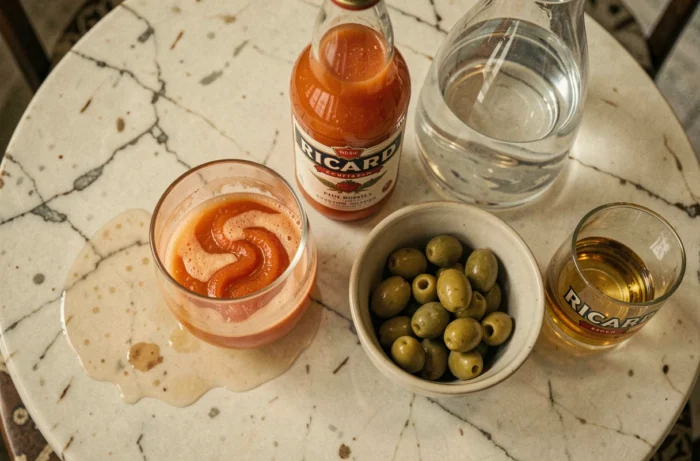
Consumption of pastis in France: a persistent regional anchoring
Purchases of pastis remain significantly overrepresented in Var compared to the national average. This is not solely a matter of tradition. Vacationers staying in the southeast adopt local habits, ordering a Ricard tomato or a mauresque by mimicry, then return home with the memory of a drink that would never have crossed their minds in their usual bar.
This seasonal dynamic explains why the Ricard tomato remains relatively obscure outside of Provence. It circulates through direct experience, not through advertising. Few cocktail menus mention it north of Lyon.
A changing spirits market
The market for alcoholic beverages in France is experiencing a contraction in volumes, with a rise in non-alcoholic or low-alcohol products. This trend affects classic spirits, including pastis. The Ricard tomato, with its festive image and accessible taste, could paradoxically find its niche among a generation that consumes less but seeks drinks that are more original than beer or rosé wine.
- Pastis attracts curious consumers in search of regional authenticity
- Pastis-based cocktails (tomato, mauresque, perroquet) diversify the bar offering
- The ritual dimension of preparation adds an experience that industrial drinks do not offer
The Ricard tomato has never needed a marketing campaign to exist. Its transmission occurs through the bartender’s gesture, the recommendation of a bar neighbor, the curiosity of a vacationer faced with that orange glass placed on the table next door. This is probably what preserves it: a drink that is discovered on-site, not on a screen.