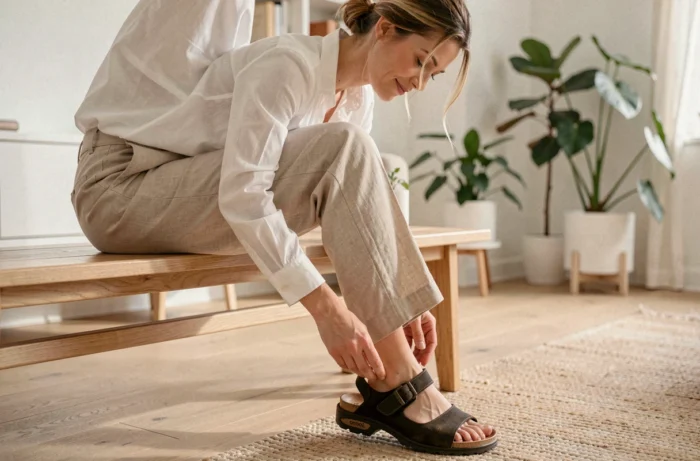
A day spent standing on a concrete floor, heel pain setting in by lunchtime, swollen feet by evening: we all know these signals. Choosing the right shoe is not just a matter of style; it is a direct lever on daily comfort and foot health. Scholl shoes are precisely positioned in this area, balancing technical fit and long-term use.
Removable insole and orthotics: a criterion that few mainstream brands meet
When wearing custom orthotics, the first instinct in-store is to check if the shoe’s insole can be removed. On many mainstream models, the insole is glued in. This results in stacking an orthotic on top, which alters the internal volume and compresses the forefoot.
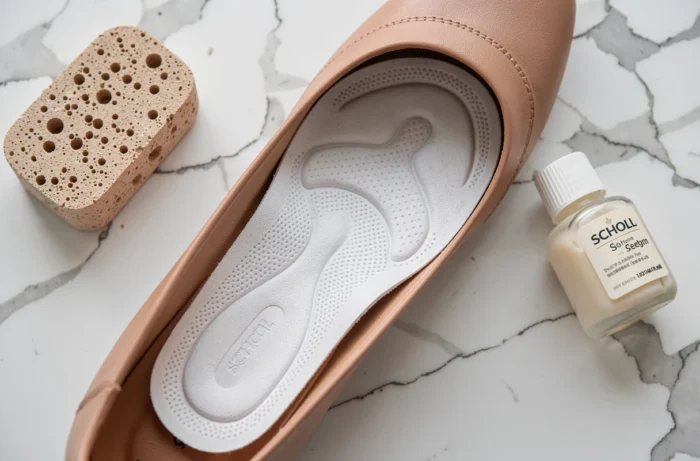
Several recent Scholl models feature a removable insole designed to accommodate an orthotic. This technical detail changes the game for orthotic wearers: the foot retains the space intended by the fit, and the orthotic functions under the conditions for which it was molded.
For individuals seeing a podiatrist, this compatibility avoids the need to purchase two pairs (one “technical” and one “presentable”). Here, we find an approach that brings Scholl closer to the orthopedic world without sacrificing the overall look of the shoe. Discover women’s Scholl shoes on Les Tendances de Mya to visualize the variety of models available in this logic.

Scholl technologies for arch support and cushioning: GelActiv, Bioprint, and Biomechanics
Simply saying a shoe is “comfortable” is not enough. We want to know what is happening concretely between the insole and the foot. Scholl segments its technologies according to need: shock absorption, arch support, postural correction.
GelActiv and Memory Cushion
The GelActiv technology relies on a gel insert integrated into the insole, positioned under the heel and forefoot. The goal: distribute pressure with each step and reduce impacts on the most stressed areas. The Memory Cushion (memory foam) works differently: it conforms to the foot’s shape after a few minutes of wear, providing personalized support without prior molding.
Feedback on this point varies depending on use. On a hard surface in a professional setting, GelActiv provides immediate cushioning. For prolonged outdoor walking, Memory Cushion seems to distribute the load better over time.
Bioprint and Biomechanics
Bioprint is an anatomical insole system that replicates the contours of the foot, with targeted arch support. The Biomechanics technology goes further by integrating gait guidance to correct postural imbalances. This last one is aimed at individuals whose pain extends beyond the foot (knee, hip, lower back).
- GelActiv: gel cushioning under the heel and forefoot, suitable for prolonged standing
- Memory Cushion: memory foam that adapts to the shape, ideal for daily walking
- Bioprint: molded anatomical insole for arch support
- Biomechanics: active postural correction, designed for gait imbalances
Scholl shoes for daily walking: beyond the wooden sandal
Scholl is still often associated with buckle wooden sandals, the ones found in pharmacies. This historical positioning masks a concrete repositioning: the brand now offers walking shoes and sneakers that incorporate the same technologies as its classic models.
For daily use (commuting, shopping, walks), these models combine a closed fit, enhanced cushioning, and heel support. We move away from pure podiatric care to enter the realm of versatile footwear.
The common thread among all models remains arch support. Whether choosing a mule, sneaker, or Scholl loafer, the insole maintains a curvature that conforms to the arch of the foot. For those prone to foot pain by the end of the day, this detail makes a difference compared to a standard flat-soled city shoe.
Relieving foot pain: when Scholl is not enough
A well-designed shoe alleviates pain, but it does not replace a diagnosis. Chronic heel pain (plantar fasciitis), deformities like bunions, or neuromas require medical advice and often custom orthotics.
Scholl occupies an intermediate zone: its technologies relieve pain related to poor footwear, not those caused by a structural pathology. The compatibility with orthotics described above takes on full meaning here, as it allows for combining personalized treatment with the comfort of the shoe.
- For temporary pain related to fatigue or an unsuitable surface, a GelActiv or Memory Cushion model may suffice
- For a diagnosed condition, consult a podiatrist and choose a model with a removable insole to insert an orthotic
- For pain extending to the knee or back, the Biomechanics range is worth testing in conjunction with medical follow-up
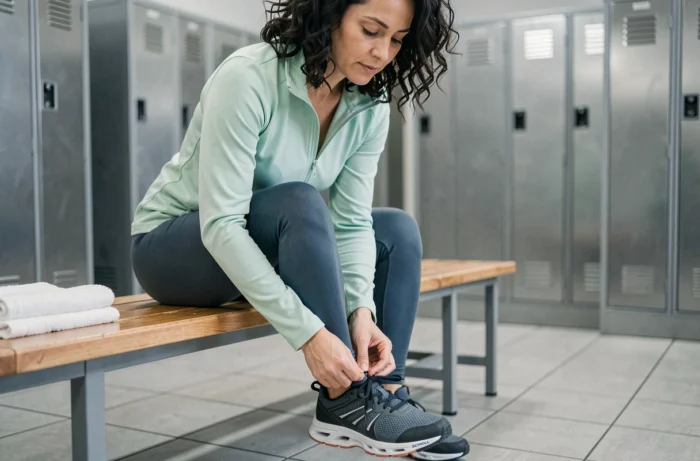
The choice of a Scholl shoe relies less on the brand itself than on the alignment between the model’s technology and the actual needs of the foot. Gel cushioning for standing, biomechanical correction for postural imbalances, a removable insole for orthotic wearers: each situation calls for a specific model. Identifying your need before purchasing remains the best guarantee of results.