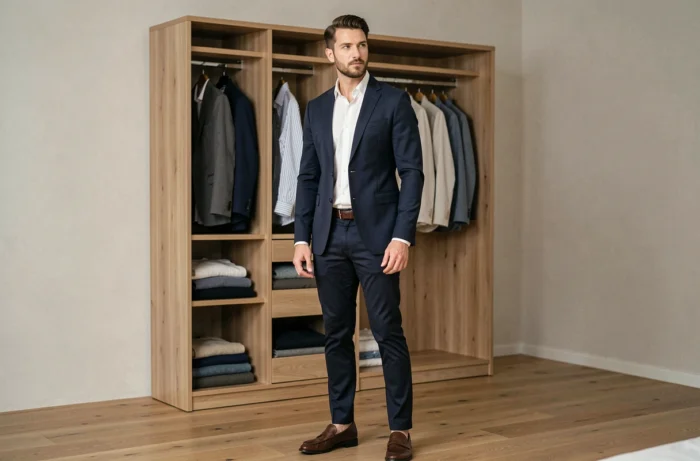
A polo worn during a video conference in the morning, jeans thrown on to grab a coffee in town, then a dinner out in the evening with the same outfit base. This scenario summarizes the daily life of many men who work in hybrid or remote modes. Choosing men’s clothing in this context means rethinking your wardrobe around versatile pieces, far from the daily suit or permanent joggers.
Hybrid wardrobe: dressing the upper body for the camera and the street
Have you noticed that during video conferences, only the upper body is visible? This detail changes everything. The upper body carries the entire perception of your outfit during a video call.
A structured collar polo, made of cotton or merino wool, provides a neat look on screen without the rigidity of a shirt. Paired with chinos when going out, it works equally well on a terrace or in a physical meeting. The polo replaces the shirt in most hybrid contexts.
The shirt remains useful, but not just any shirt. Opt for a slightly fitted cut with a collar that holds without a tie (button-down or Italian collar). Slightly textured fabrics (oxford, chambray) perform better in natural light at home than overly shiny poplin.
An unlined blazer, made of cotton or jersey, draped over the back of a chair, can be grabbed in two seconds before a more formal call. It transforms a simple white t-shirt into a credible outfit. Browsing men’s clothing on Must Paris allows you to spot these types of intermediate pieces that serve multiple purposes.
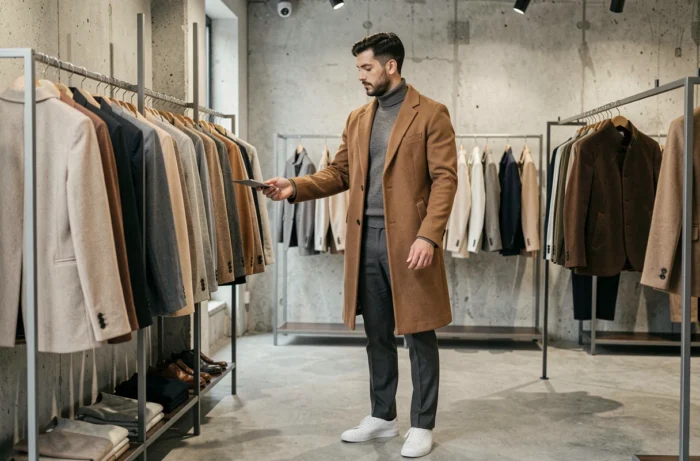
Men’s capsule wardrobe: pieces that cover all uses
Accumulating clothes solves nothing if half of them are sitting in the closet. The logic of a capsule wardrobe is to reduce the number of pieces to increase the possible combinations.
Five bottoms and seven well-chosen tops generate several dozen different outfits. The principle relies on the compatibility of colors and styles between each piece.
Here are the basics that work from home office to dinner out:
- A stretch cotton chino, straight or slightly tapered cut, in a neutral color (navy, beige, gray). It replaces jeans during video calls and remains comfortable all day.
- A raw or slightly faded jean, without tears, that works well under a blazer or a crew neck sweater.
- A pair of cold wool or lightweight flannel pants for physical meetings or outings that require a step up from casual.
- Two polos (one dark solid, one light), a white oxford shirt, and a micro-patterned shirt to cover the week without visible repetition on screen.
Sorting is also a style gesture. Replacing a tired piece with a single higher-quality item strengthens the overall coherence of the wardrobe, rather than multiplying impulsive purchases.
Colors and materials: what works on screen as well as outdoors
Webcams compress colors and flatten textures. A plain light gray t-shirt loses all relief on screen, while a navy polo or a tobacco-colored sweater retains its depth.
Medium to dark shades perform better in video calls than very light or very bright colors. Pure white dazzles the camera, while black absorbs details. The ideal range lies between navy blue and fir green, including burgundy and brown.
Regarding materials, the touch matters as much as the visual effect. A cotton with a sufficiently dense weight retains its shape after several hours of sitting. Cotton-linen blends work in summer, provided you accept a slight natural wrinkle (which adds character rather than looking neglected).
Men’s accessories: the details that elevate a simple outfit
A discreet leather bracelet, a watch with a simple dial, or a well-chosen pair of glasses is enough to give character to a minimal outfit. In video conferences, these small elements capture attention without overwhelming.
One well-visible accessory is better than three layered ones. A good quality leather belt, worn with chinos, unifies the silhouette. Smooth leather shoes (derby, loafers) complete the transition to the outside when you leave the office.

Tailoring and adjustments: the most underestimated style lever
You can invest in the best pieces on the market, but if they don’t fit your body correctly, the effect is lost. A few centimeters of tailoring can transform an ordinary garment into a custom piece.
The most cost-effective adjustments involve the length of shirt sleeves, shortening pants, and tapering a blazer at the waist. These are inexpensive interventions that a tailor can accomplish in a few days.
Before buying, test the piece in motion: sit down, raise your arms, walk. A shirt that pulls at the shoulders or pants that bunch at the crotch will never be salvaged by an accessory.
Clothing care: extending the lifespan of each piece
A low-temperature wash, air drying, and hanging structured pieces on hangers are enough to double the longevity of a garment. Replacing one piece at a time when it wears out maintains the overall quality of the wardrobe without requiring a complete renewal.
Regular brushing of wool jackets and treating leather shoes with appropriate polish are simple gestures that change the perception of an outfit.
Building a defined style does not come from accumulating trends. A wardrobe centered around fitted pieces, in durable materials and compatible colors, covers all situations of hybrid daily life. The next piece to add is not necessarily the one that’s missing, but the one that would replace the most worn-out.