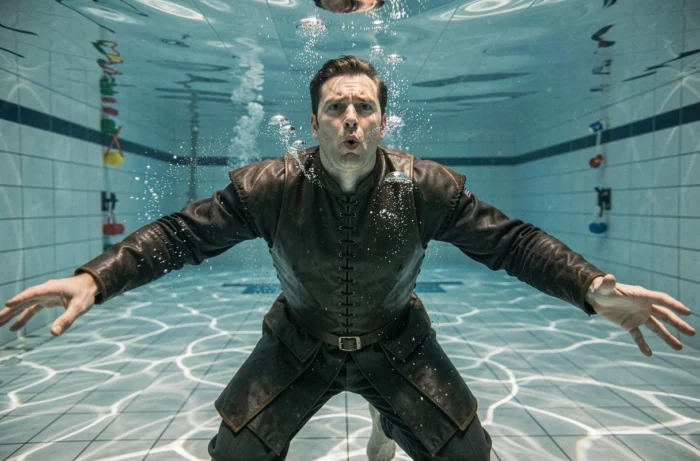
The aquatic shows at Puy du Fou raise a specific technical question: how do actors remain submerged during long sequences, sometimes in armor or heavy costumes, without visible diving equipment to the audience? The answer involves several disciplines, from respiratory physiology to stage engineering, and each parameter directly influences the duration and safety of the immersions.
Stage Apnea and Immersion Reflex at Puy du Fou: What Physiology Allows
The starting point of any aquatic performance without a tank remains apnea. The actors at Puy du Fou do not breathe underwater: they hold their breath and then surface to take a breath when the choreography allows.
What distinguishes stage apnea from classic sports apnea is the constraint of acting. The actor must move, mimic a fight, fall, or swim with amplitude, all of which accelerate oxygen consumption. The safety margin is reduced compared to static apnea in a pool.
A physiological mechanism plays a central role: the immersion reflex. When the face comes into contact with cold water, the heart rate automatically slows down, and blood circulation concentrates towards vital organs. This reflex, documented in diving physiology, allows for a measurable extension of apnea duration, even in untrained individuals.
To understand how actors breathe underwater at Puy du Fou, it is necessary to combine this natural reflex with specific respiratory training and choreography designed to create invisible air recovery windows for the audience.

Respiratory Techniques and Physical Preparation of Aquatic Actors
The preparation of performers relies on three complementary pillars. Their combination determines each actor’s ability to chain submerged sequences throughout an entire season of shows.
| Technique | Main Objective | Effect on Performance |
|---|---|---|
| Diaphragmatic Breathing | Maximize the volume of air inhaled | Increases oxygen reserve before immersion |
| Progressive Apnea Exercises | Accustom the body to CO₂ retention | Delays the forced breathing reflex |
| Mental Preparation and Stress Management | Reduce oxygen consumption related to anxiety | Extends useful duration underwater |
Diaphragmatic breathing involves using the diaphragm rather than the intercostal muscles to inhale. It allows for a more complete filling of the lungs than classic thoracic breathing.
Progressive apnea exercises, practiced outside of performances, work in stages: the actor holds their breath for increasing durations, with calibrated recovery times. This protocol gradually trains the body to tolerate higher levels of carbon dioxide in the blood, which delays the sensation of respiratory urgency.
Stress management is the third factor. In a performance situation, the pressure of the audience, noise, water temperature, and coordination with other actors generate an adrenaline rush. A stressed actor consumes oxygen much faster. Targeted relaxation techniques, similar to those used in extreme sports, aim to maintain a low heart rate despite the intensity of the scene.
Pressure Compensation and Physical Constraints in the Scenic Basin
One aspect rarely addressed behind the scenes of aquatic shows concerns ear pressure management. From the first meters of immersion, pressure increases and can cause discomfort or even pain if not compensated.
Actors must practice the compensation maneuver (gently exhaling through the nose while pinching it) at each descent, sometimes several times per performance. This constraint adds to the management of apnea and requires specific training to automate the gesture without breaking the performance.
- The depth of scenic basins, even modest, is enough to cause ear overpressure if compensation is not performed
- Heavy costumes (armor, water-soaked capes) increase resistance to movement and energy expenditure underwater
- The water temperature, varying by season, alters the intensity of the immersion reflex and the body’s cooling rate
These physical parameters explain why the actual duration of submerged sequences remains relatively short. The staging compensates with visual effects (smoke, lighting, artificial waves) that mask the moments when actors catch their breath at the surface.
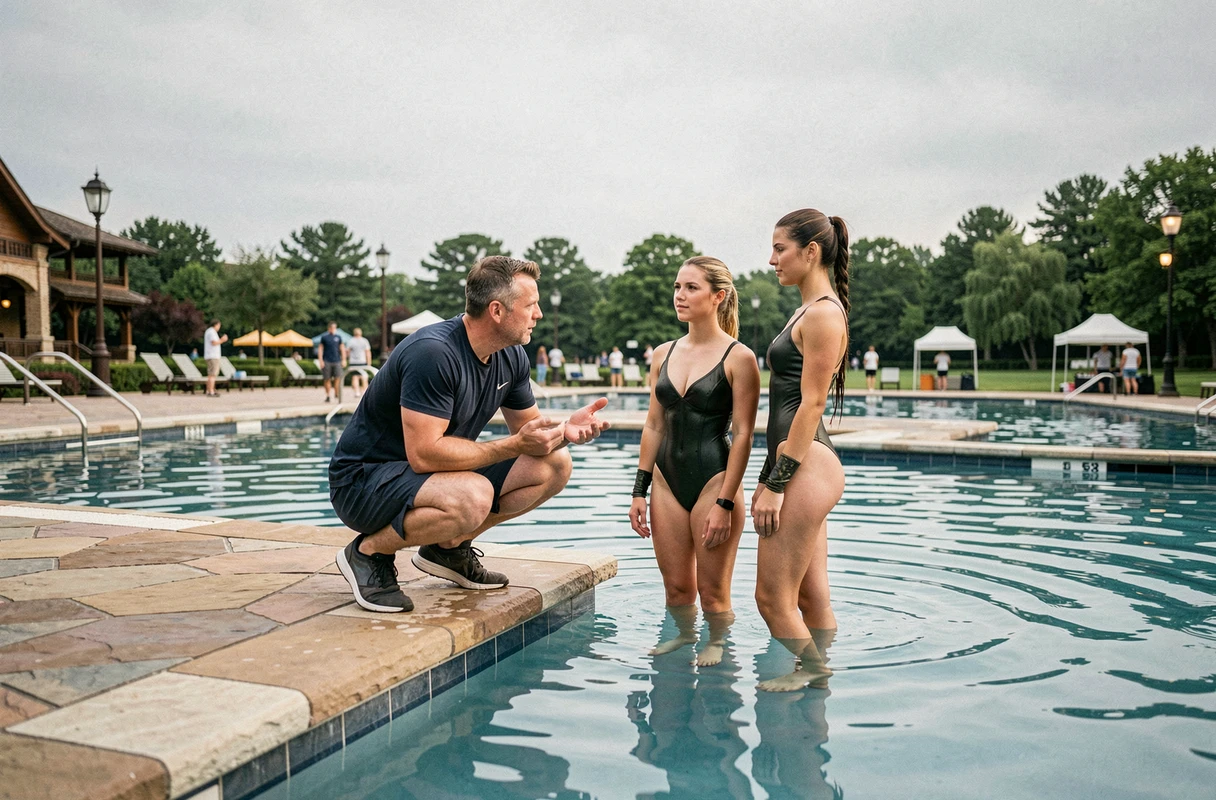
Controlled Liquid Breathing: Technical Innovation or Storytelling at Puy du Fou
Puy du Fou has communicated about a technique called Controlled Liquid Breathing, presented as an innovation allowing actors to breathe directly from hyper-oxygenated water. This announcement, relayed by executive artistic director Laurent Tard, generated several million views on social media.
As per the current accessible knowledge, no medical or sports device allows a human being to breathe water, even if enriched with oxygen. Human lungs are not designed to extract oxygen from a liquid. Liquid ventilation exists in experimental medical research but has never been deployed in a live performance context.
However, this communication fits into the park’s narrative strategy, which cultivates mystery around its technical processes. The very term “best-kept secret” appears in several of their official publications.
What actually happens during shows like Les Vikings or Le Secret de la Lance relies on the combination described above: trained apnea, choreography that allows for air recoveries, utilized immersion reflex, and staging that creates the illusion of prolonged immersion.
What the Audience Perceives vs. What Actually Happens
The genius of Puy du Fou lies in the synchronization between the scenography and the actual physical capabilities of the actors. The underwater sequences are short but linked with visual transitions that mask each air recovery. The audience, focused on the dramatic action, does not perceive the micro-surface rises.
Thus, breathing underwater at Puy du Fou is neither a magic trick nor a technological revolution. It is a rigorous physical preparation effort, combined with meticulously planned staging, where every second of immersion is pre-planned to ensure the actors’ safety while preserving the illusion of the show.